Our digital world feels weightless, virtual, in the cloud, disconnected from the physical. Yet behind every click, stream, and AI prompt lies a vast material infrastructure consuming energy, water, and rare resources.
My bachelor project explores this hidden side of digitality, showing how technology and ecology are intertwined and how the virtual always remains deeply physical. It is a study of tension between progress and depletion, between human control and natural resilience.
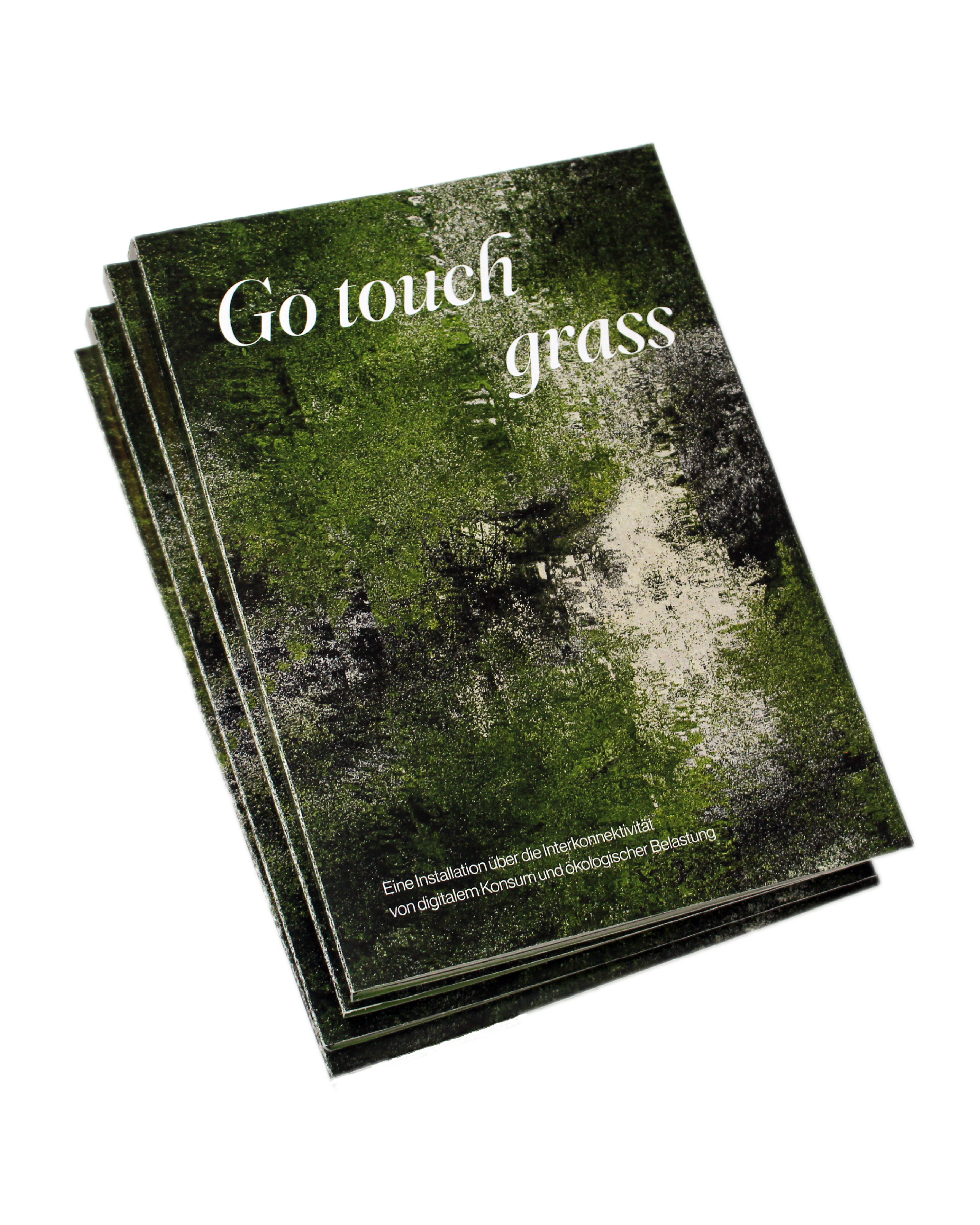
Part Ⅰ - Theoretical Research and Magazine Design
The theoretical part of my work examines the ecological footprint of digital technologies. Smart devices, global connectivity, and artificial intelligence shape our lives, but they also demand immense energy and material resources. Digital systems already produce around 4 percent of global carbon emissions, surpassing civil aviation.
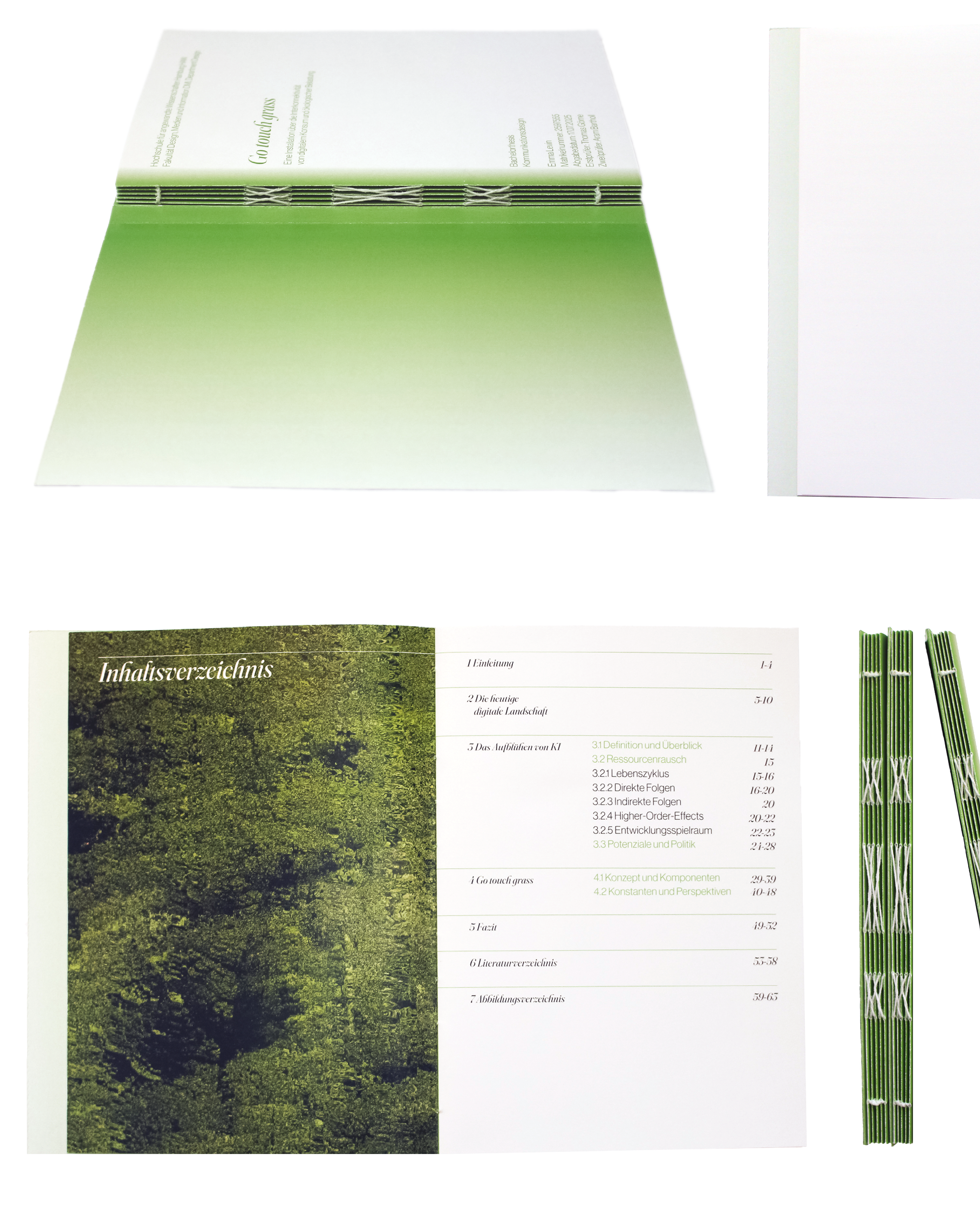
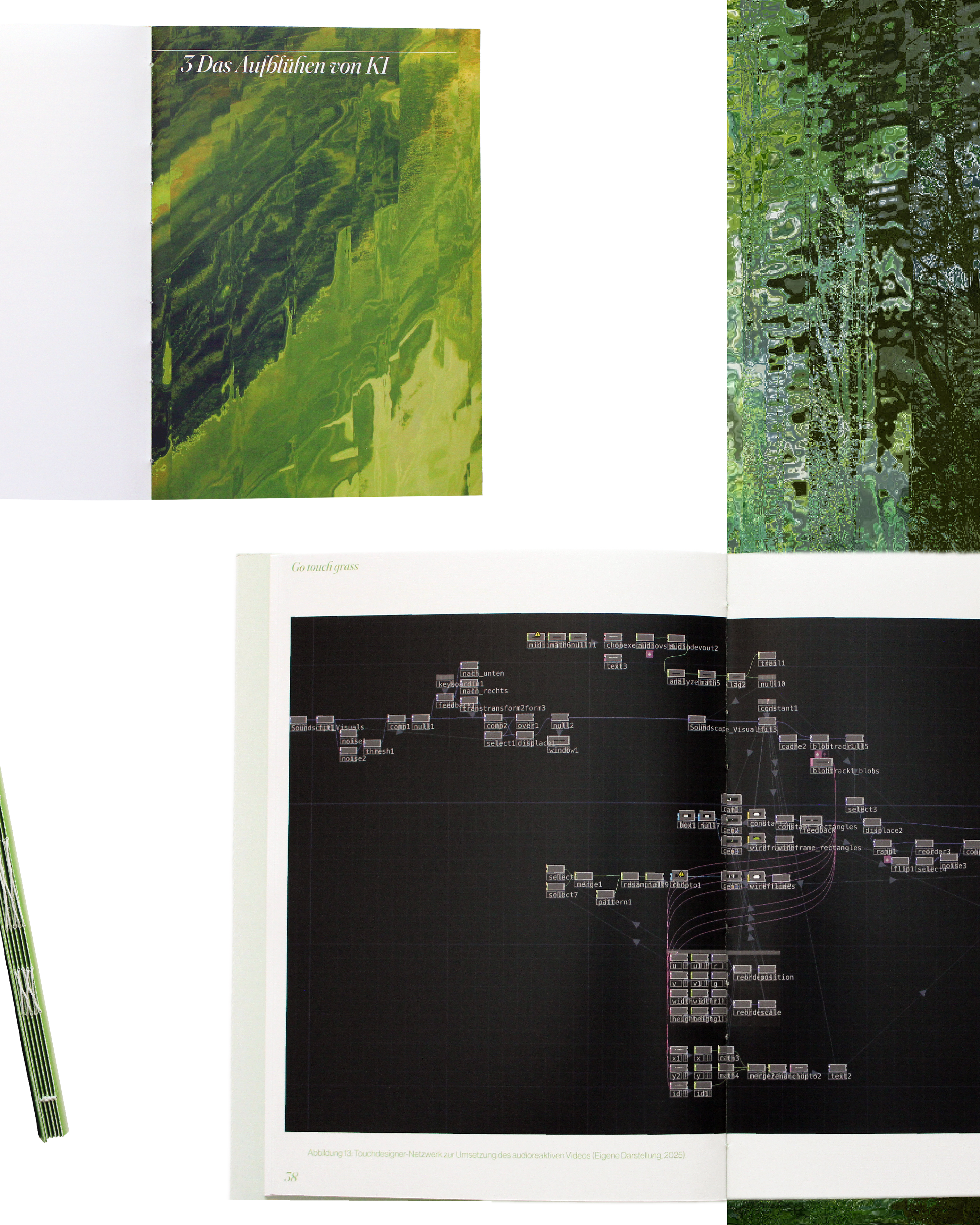
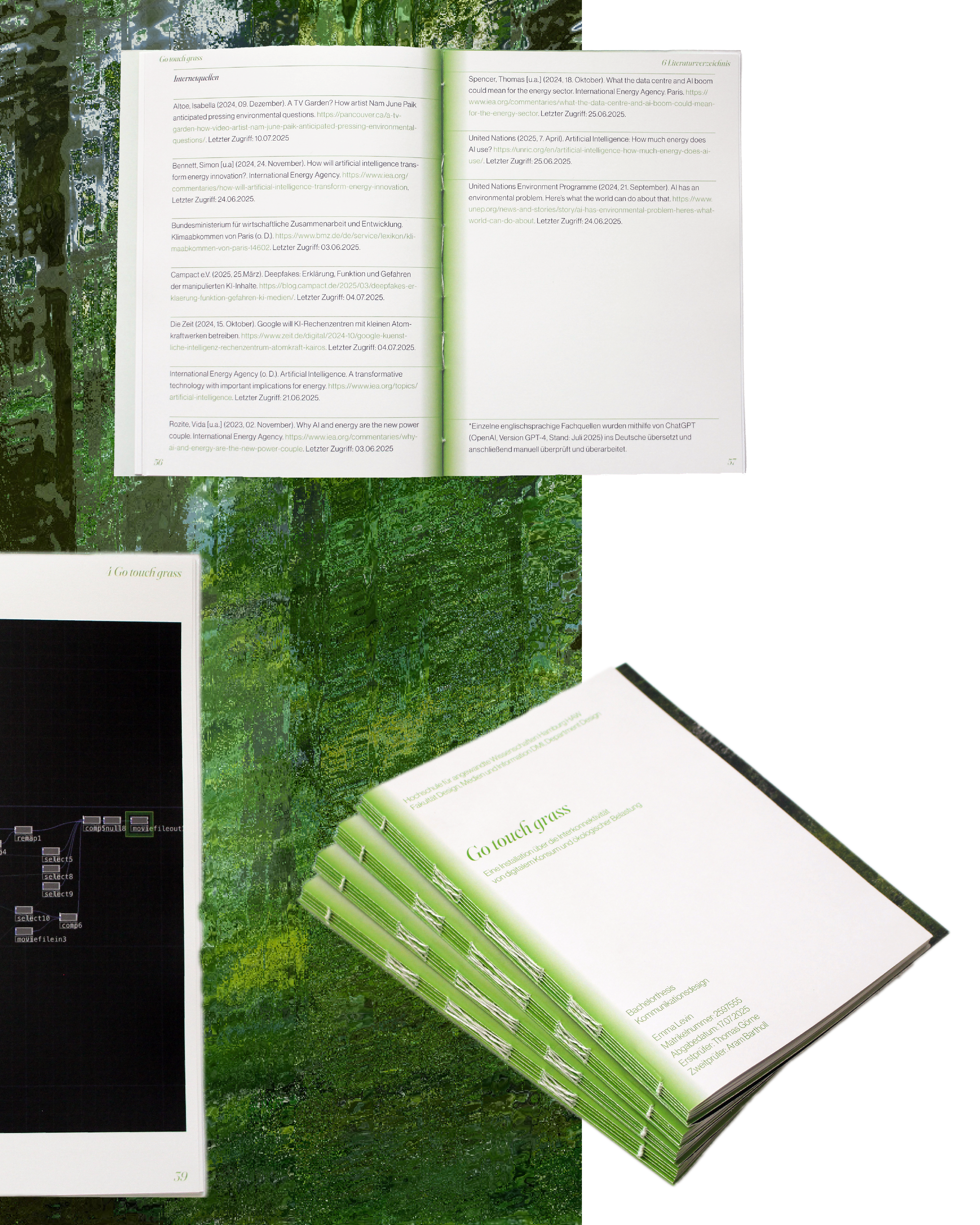
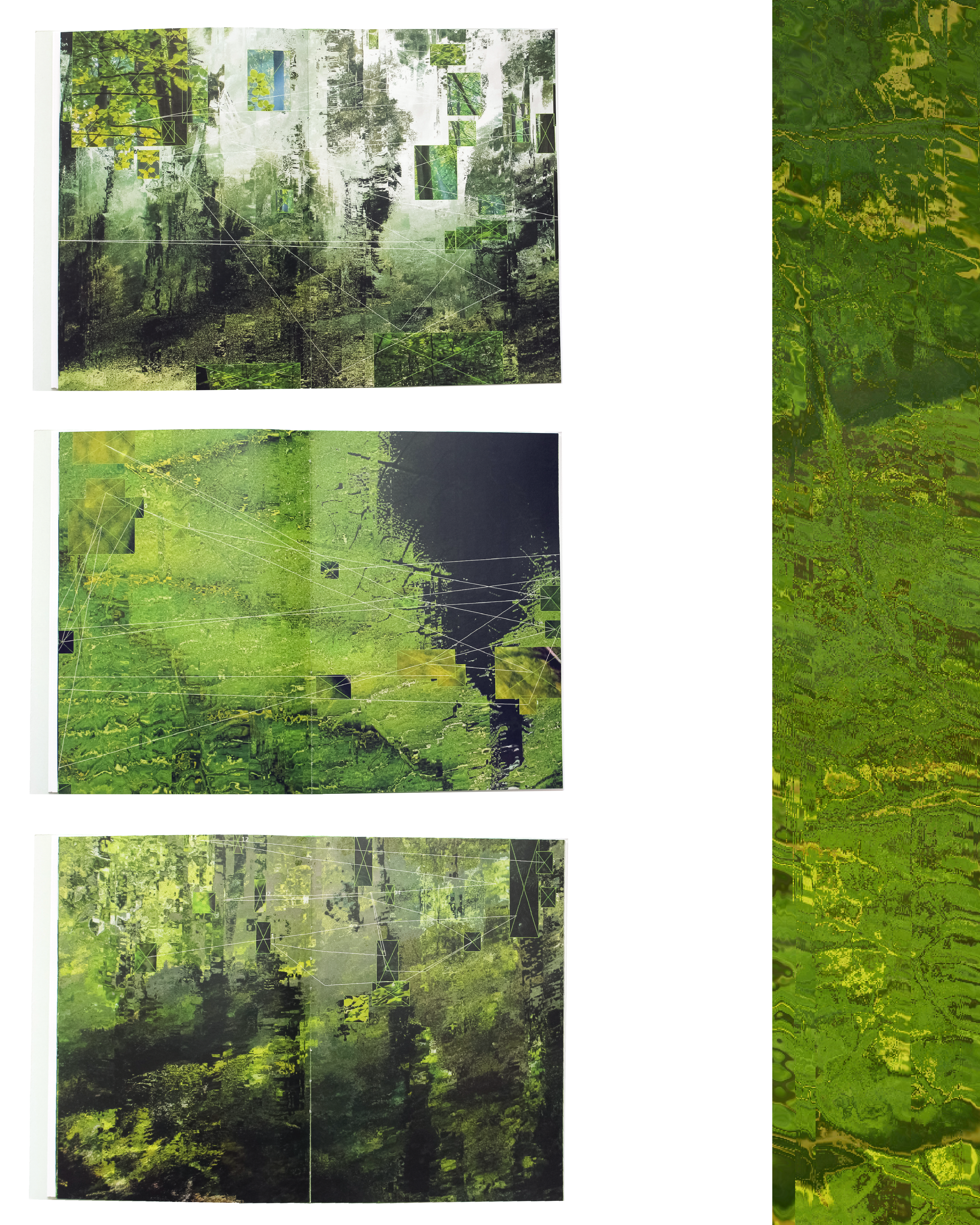
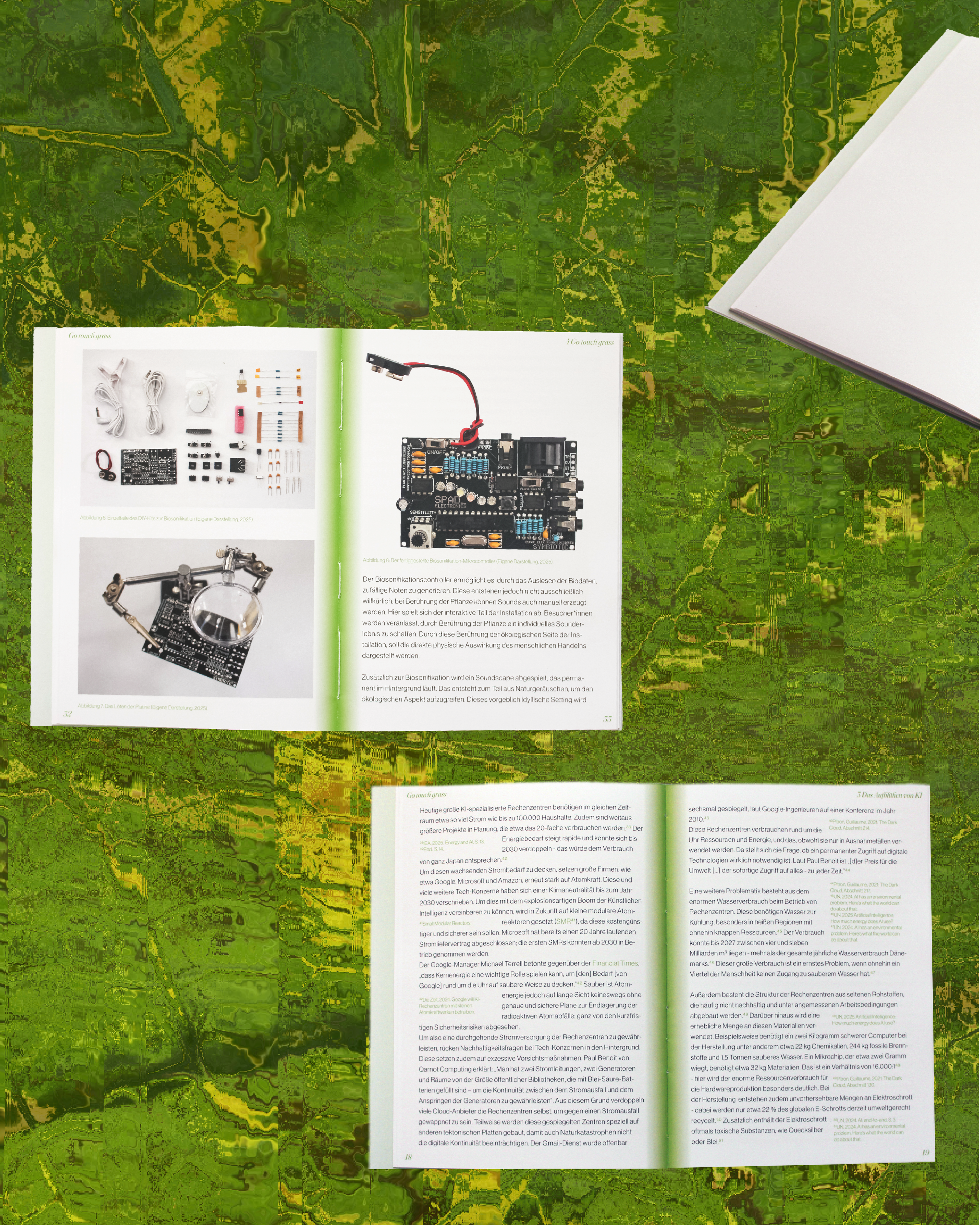
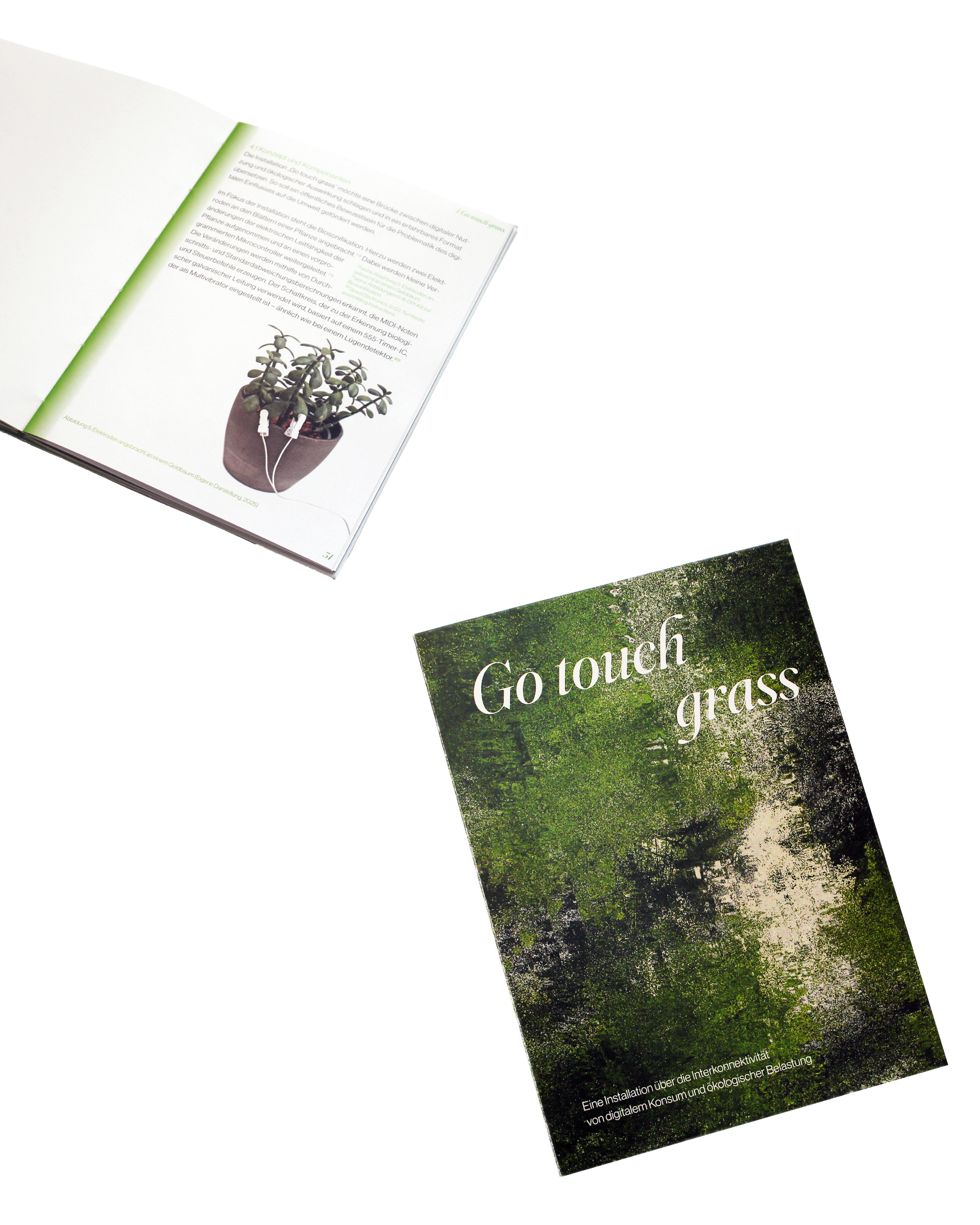
In my magazine design, I translated these contrasts between nature and technology into visual form. A precise, geometric typeface meets an organic, playful one. Green inserts and gradients represent nature reclaiming space. The Swiss binding with visible threads makes the production process transparent, reflecting the infrastructures hidden beneath the digital world.
The publication invites reflection on the duality of technological progress, highlighting both innovation and efficiency as well as ecological and social impact.
Part ⅠⅠ - The Installation
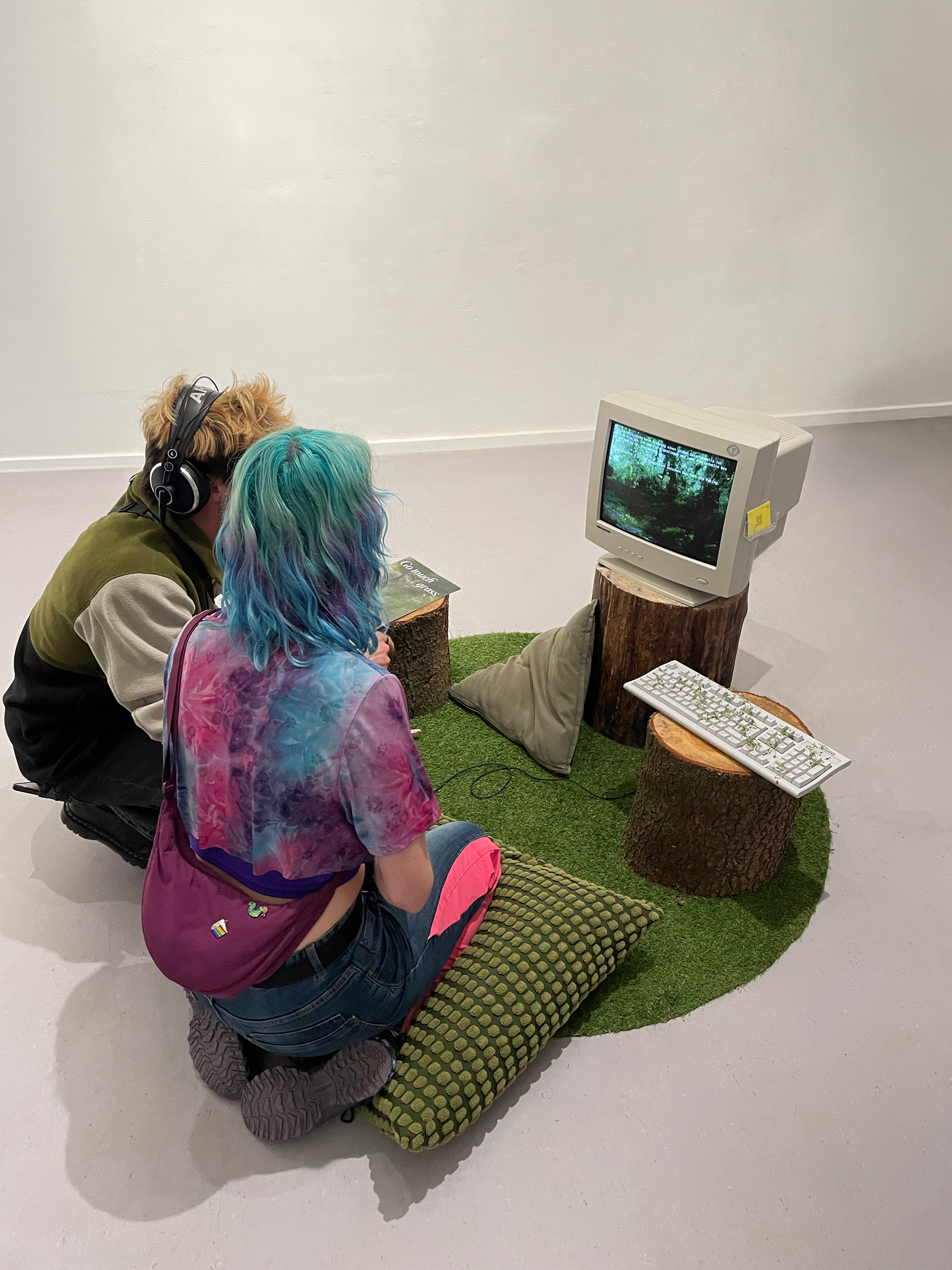
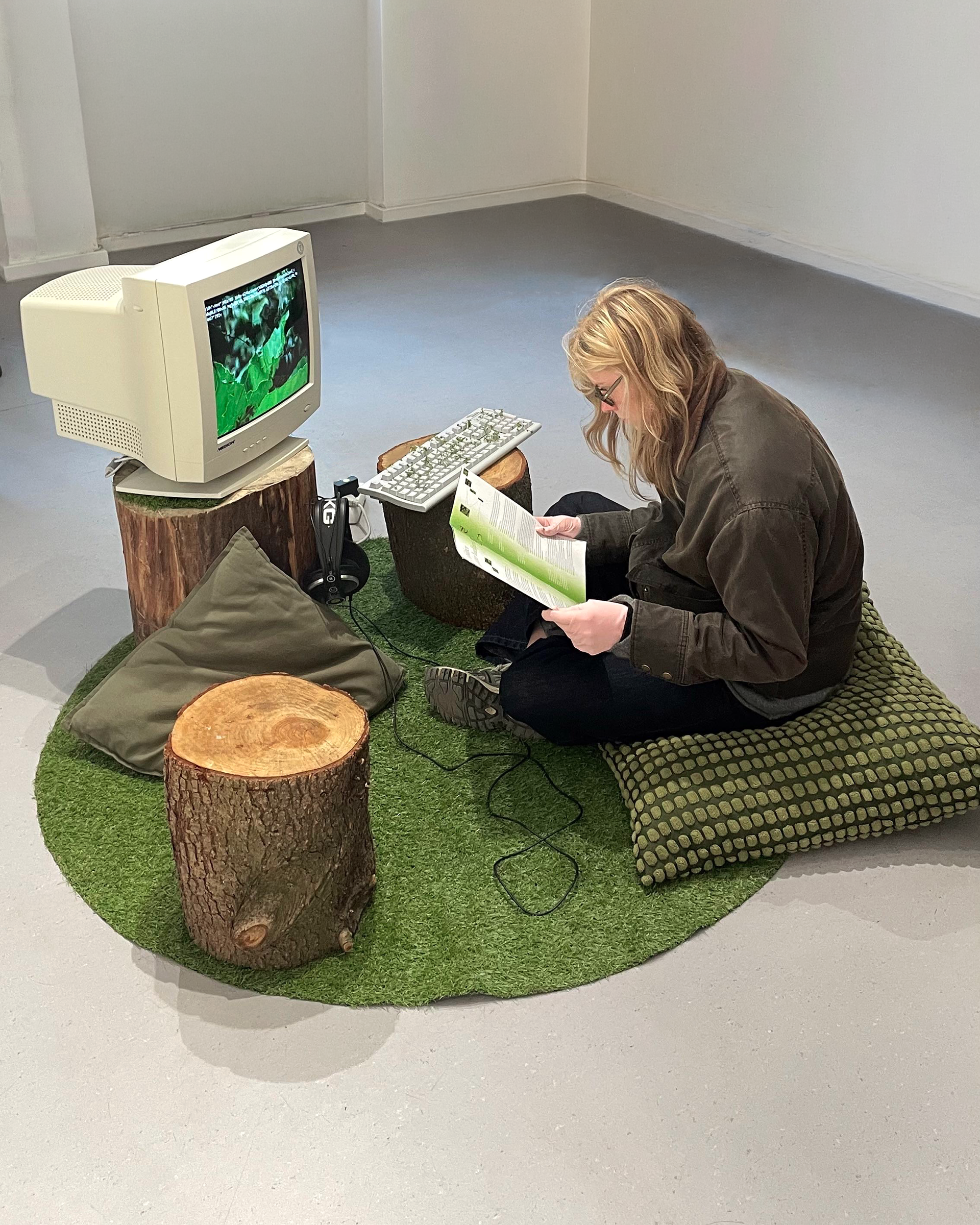
The installation turns research into an experiential format, creating a bridge between digital systems and their ecological consequences.
A soundscape of forest, wind, and water sets a calm scene, gradually interrupted by subtle glitch sounds derived from environmental data. A continuously rising Shepard tone symbolizes the ever-growing impact of AI.
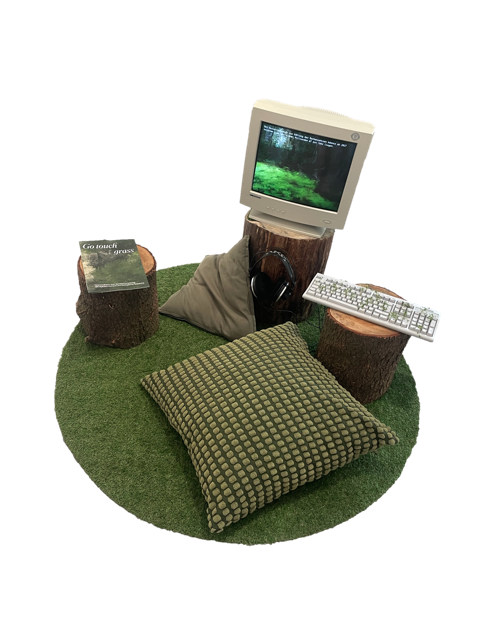
Through biosonification, a living plant becomes part of the work. Its electrical signals are converted into MIDI notes that shape the experience. Human touch changes both audio and video, creating a dialogue between organism and algorithm.
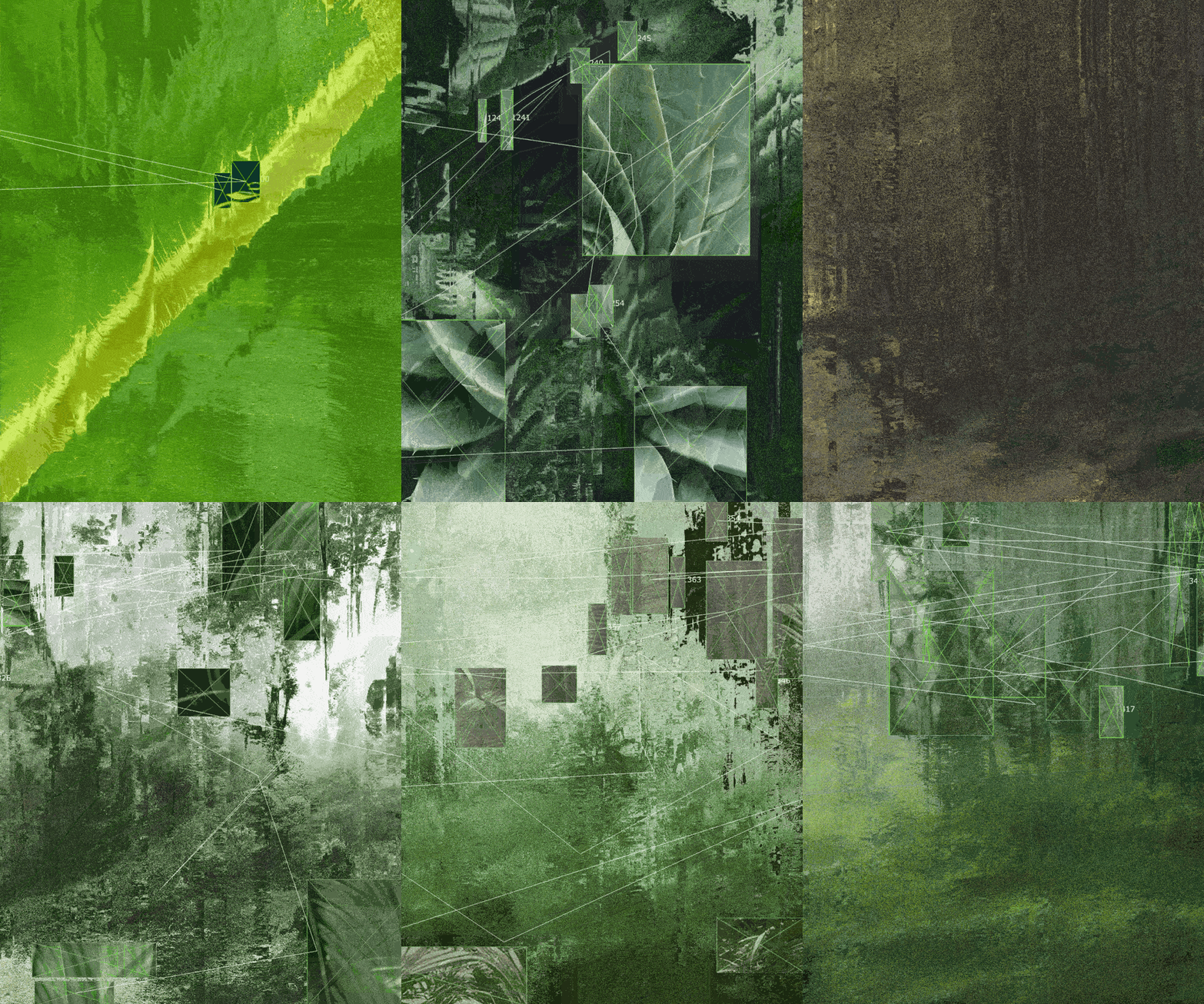
The video projection combines real and AI-generated nature imagery with soft transitions and glitch effects, blurring the line between what is real and artificial. When the plant reacts, parts of the true landscape are revealed, emphasizing the presence of nature within the digital.
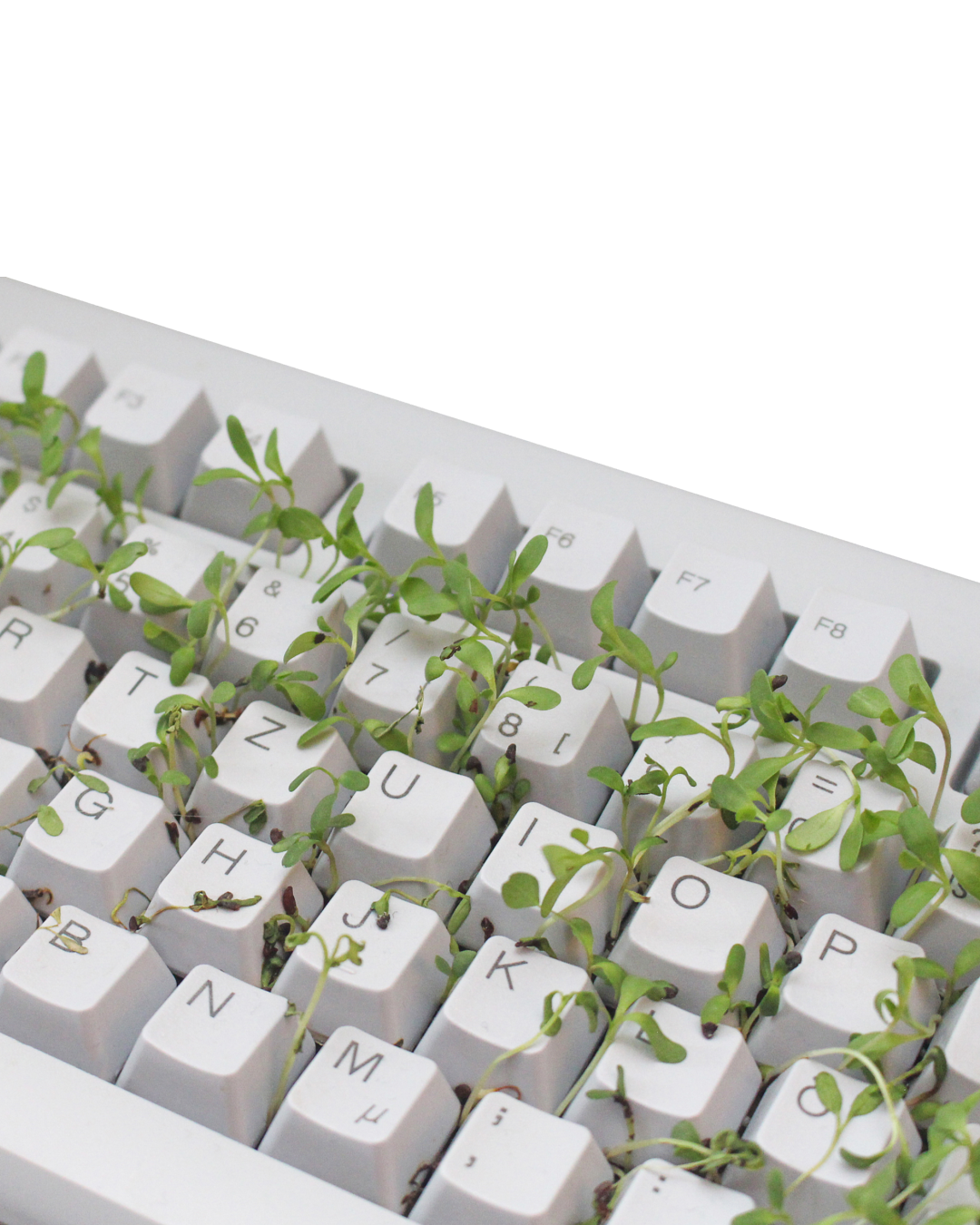
An old CRT monitor and keyboard complete the setup. On-screen, key ecological facts about AI appear as if typed by the plant itself, highlighting how nature reclaims the digital space.
The work is defined by tension between digital and organic, control and chance, progress and loss.
The work was exhibited at the “Call Me #9“ at Frappant e.V., Hamburg, and is also featured on their website.